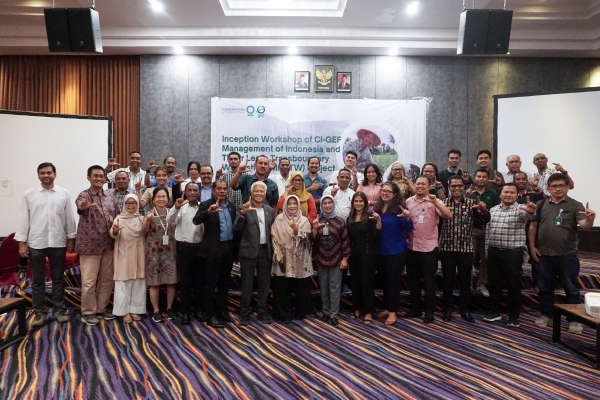
Indonesia and Timor-Leste Unite to Protect Shared Watersheds: The Launch of the TIWA Project
Kupang, 23 May 2025 — A new milestone in environmental diplomacy has been reached. Indonesia and Timor-Leste have launched the Timor Island Watersheds (TIWA) Project, a landmark transboundary initiative to sustainably manage two critical river basins: Talau-Loes and Motamasin. Initially, this project was stated as Management of Indonesia and Timor Leste Watersheds Management Project (MITLTW). This is the first joint watersheds management project between the two nations, and a pioneering effort in Southeast Asia under the Global Environment Facility (GEF).
“When rivers cross borders, cooperation must flow.”
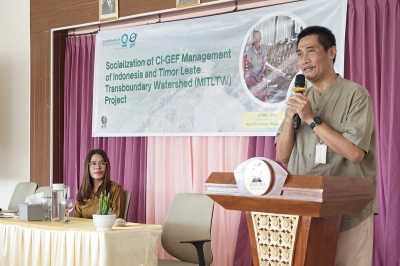
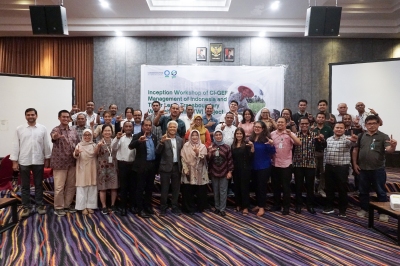
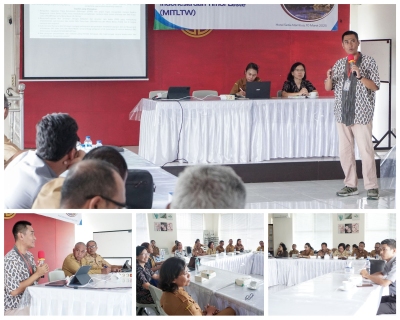
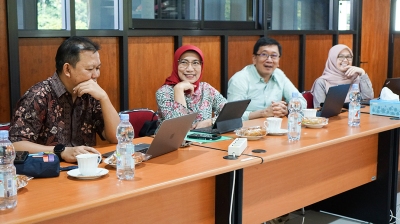
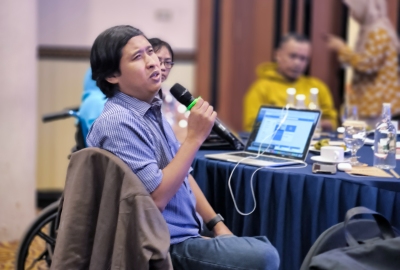
The Inception Workshop, held at Hotel Sotis Kupang, brought together over 100 stakeholders—government officials, scientists, NGOs, and community leaders—from both countries. Hosted by Conservation International (CI) - GEF Agency, and CI Timor-Leste, and Inovasi Tangguh Indonesia (InTI) as co-executing agencies to support Government of Indonesia and Timor-Leste, the workshop laid the groundwork for a five-year collaboration aimed at ensuring water security, environmental resilience, and sustainable livelihoods.
More than Just a Project: A Shared Commitment to People and Planet
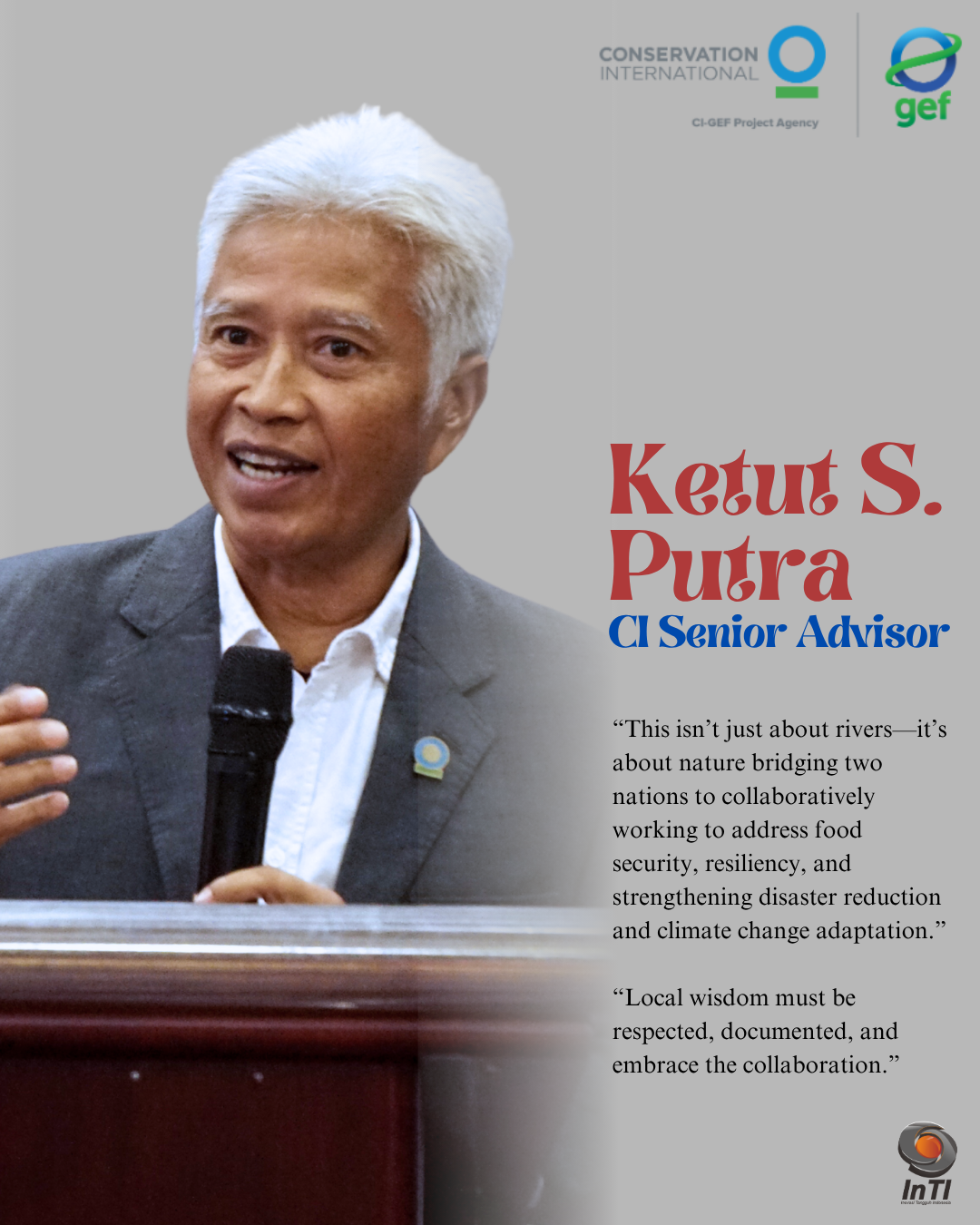
“This isn’t just about rivers—it’s about nature bridging two nations to collaboratively working to address food security, resiliency, and strengthening disaster reduction and climate change adaptation,” said Ketut S. Putra, Senior Advisor of Conservation International (CI). He proposed the name TIWA Project to reflect the shared ecosystem of Timor Island. The project will serve as a living model of how natural systems can bring nations together in an era of division. Ketut also highlighted that local wisdom must be respected, documented and embrace the collaboration.
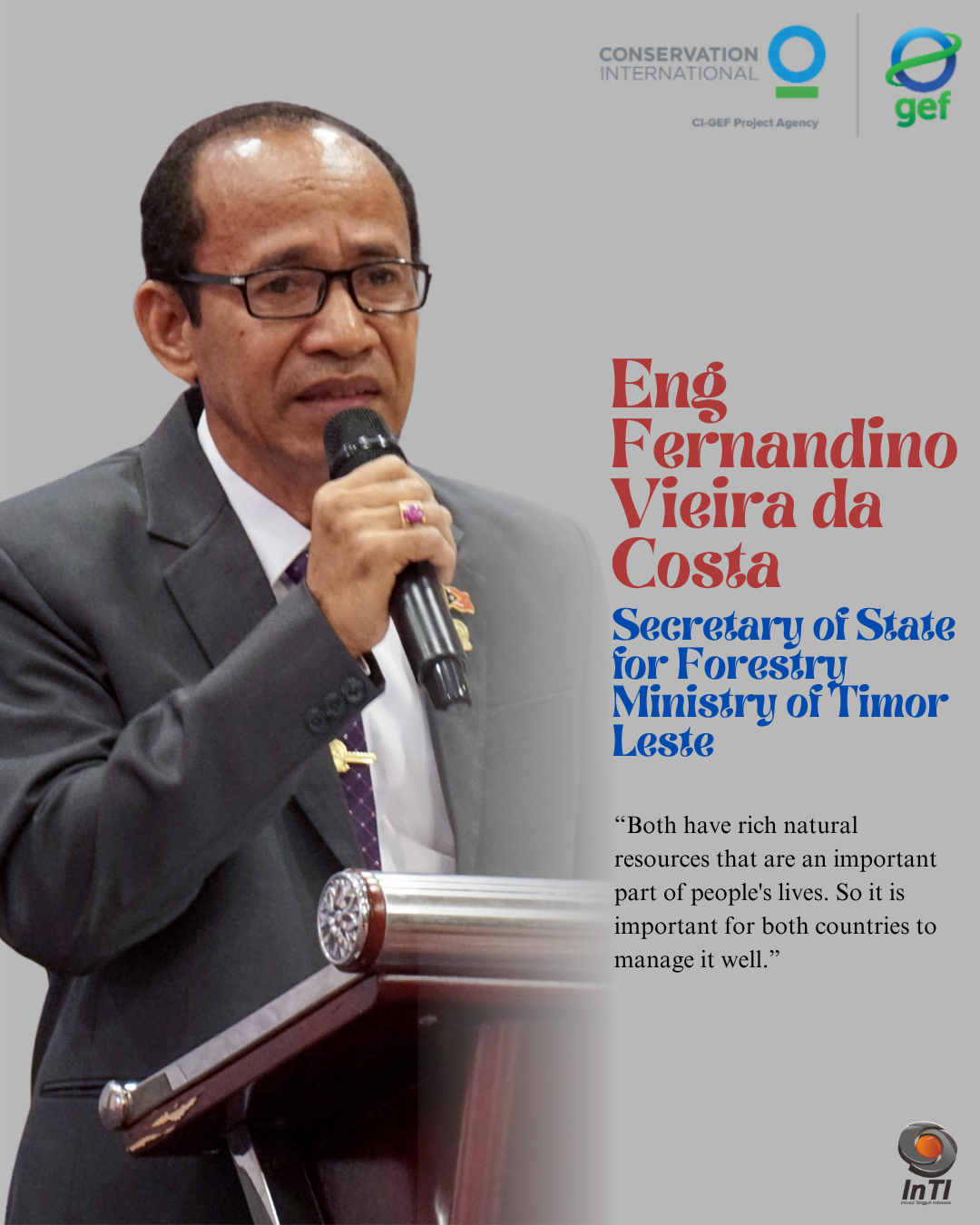
Of the 10 existing watersheds, Talau-Loes and Motamasin have been chosen as the starting point for cooperation. “Both have rich natural resources that are an important part of people's lives. So it is important for both countries to manage it well,” Eng Fernandino Vieira da Costa, the Secretary of State for Forestry Ministry of Timor Leste stated.
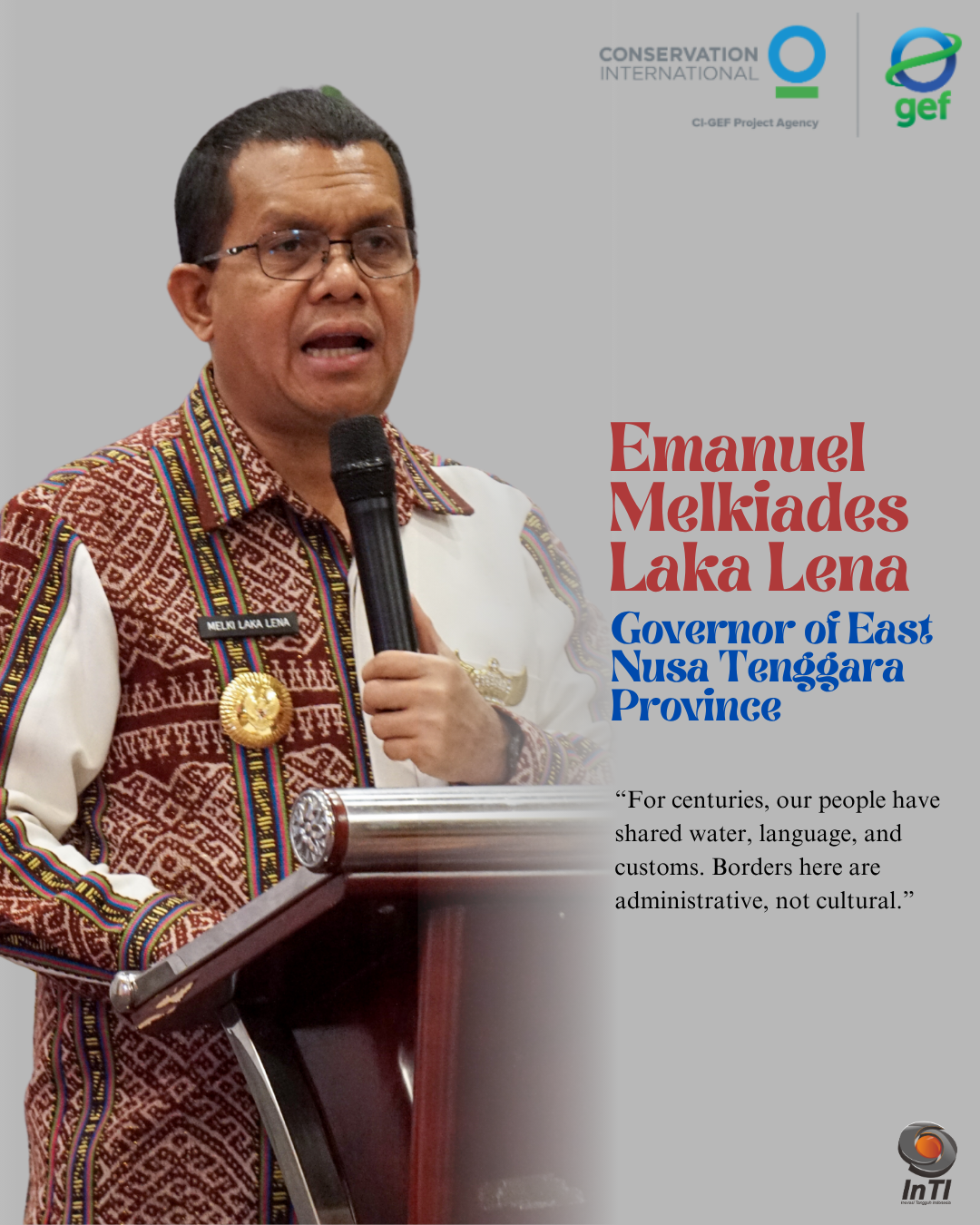
Governor Emanuel Melkiades Laka Lena of East Nusa Tenggara Province of Indonesia emphasized the deep cultural bonds that unite border communities: “For centuries, our people have shared water, language, and customs. Borders here are administrative, not cultural.”
The project also acknowledges the voices of women, indigenous groups, and marginalized communities, ensuring inclusivity in both planning and implementation.
Science and Tradition: The Twin Engines of TIWA
Research by Universitas Nusa Cendana (UNDANA) and Universidade Nacional Timor Lorosa’e (UNTL) highlighted ecological threats: deforestation, soil erosion, flooding, water scarcity, and climate change. These risks threaten over 450,000 people in the watershed areas.
Professor Eduardo Aniceto Serrao from UNTL stressed: “Our ecosystems are interconnected. We must base action on local knowledge as much as scientific data.”
Norman Riwu Kaho from UNDANA mentioned that there are still many mysteries that need to be unrevealed from the watershed. “There is hope for improving the community's economy for the sake of its welfare while maintaining environmental sustainability. It is true that there are administrative boundaries in the watershed area, but science without borders, so collaboration is very important and necessary,” he stated.
To address this, the TIWA Project focuses on four key outputs:
- Transboundary Diagnostic Analysis (TDA) – to assess environmental and socio-cultural conditions
- Joint Forestry Working Groups (JFWG) and Village Task Force Capacity Building – multi-stakeholder teams guiding collaboration in managing the watersheds.
- Strategic Action Plans (SAP) – policy and program roadmaps grounded in field realities
- Monitoring & Evaluation (M&E) – ensuring accountability, learning, and community feedback
Bridging Gaps, Building Resilience
Speakers from both countries called for turning decades-old MoUs into tangible benefits. As President of the Municipal Authority of Bobonaro, Alexander Pires, said: “We’ve signed papers for years. Now, it’s time for real impact.”
Challenges remain—especially institutional coordination and data integration. However, the workshop affirmed strong commitments to synchronize methodologies, share knowledge, and create joint frameworks for action. Participants also agreed to document local wisdom, such as the traditional peace-making rituals performed at rivers, as essential contributions to resilience and peace.
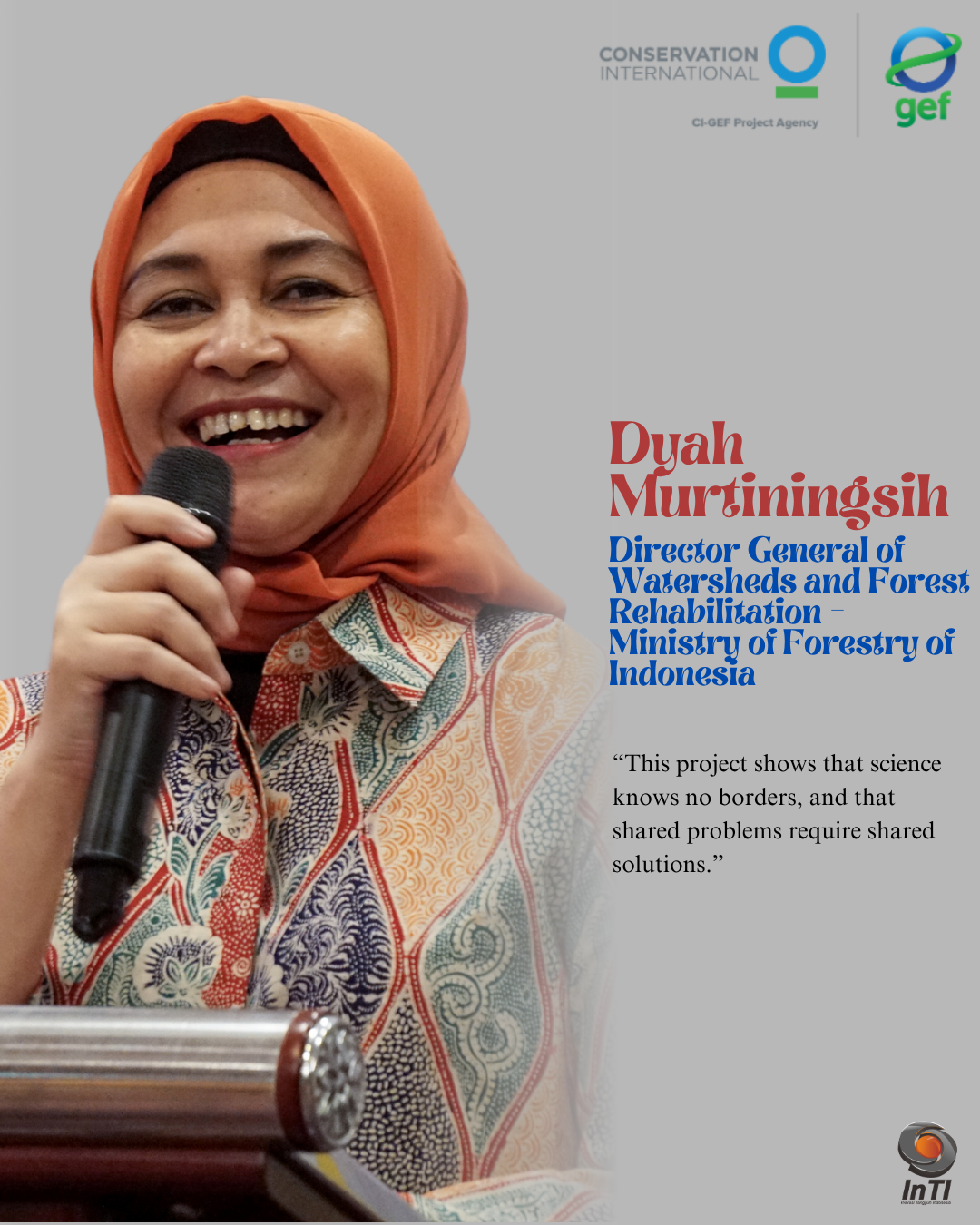
“This project shows that science knows no borders, and that shared problems require shared solutions,” said Dyah Murtiningsih, Director General of Watersheds and Forest Rehabilitation, Ministry of Forestry of Indonesia.
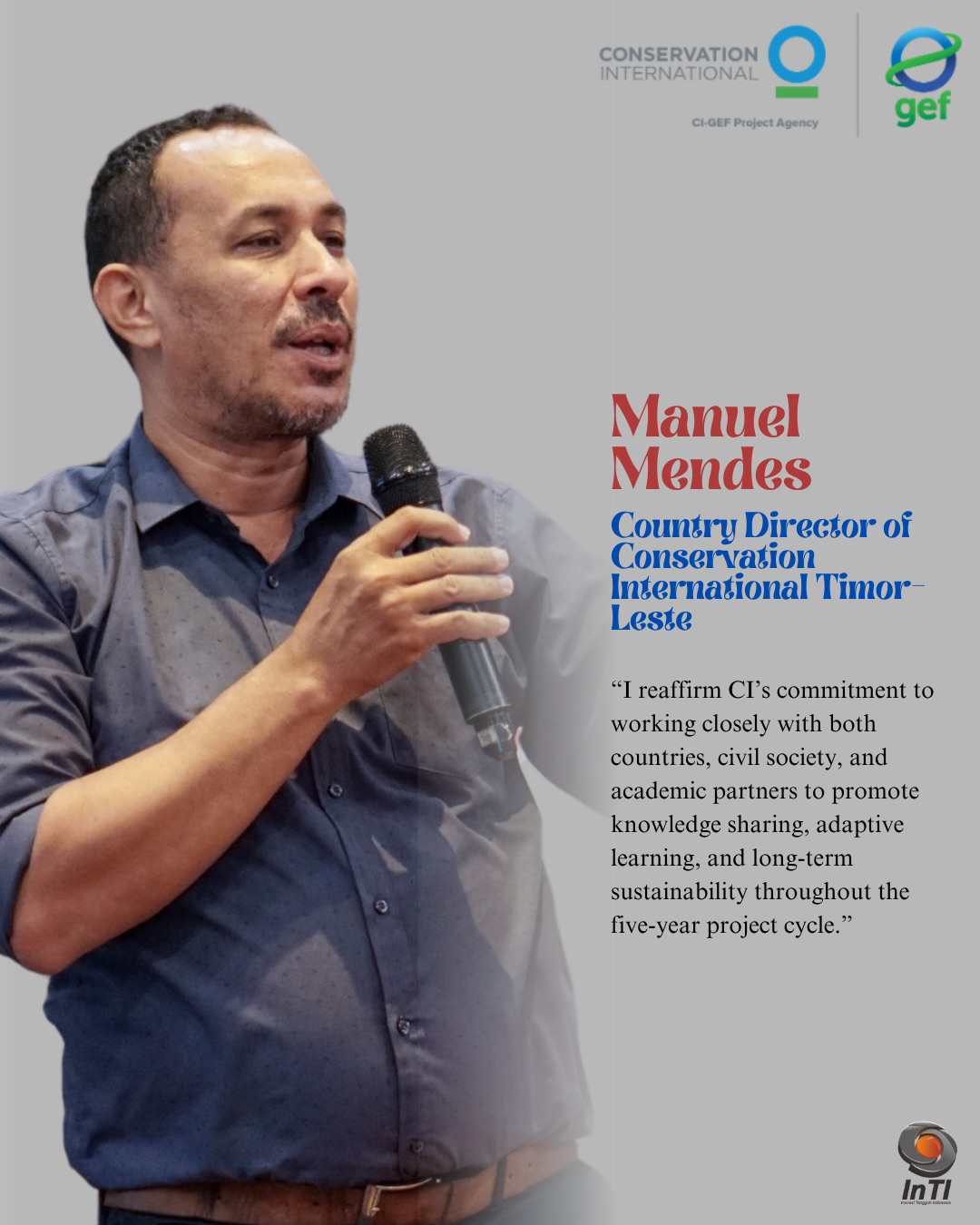
Manuel Mendes, Country Director of Conservation International Timor-Leste, emphasized the importance of long-term collaboration, cross-sectoral commitment, and community ownership in achieving the goals of the TIWA project. He reaffirmed CI’s commitment to working closely with both countries, civil society, and academic partners to promote knowledge sharing, adaptive learning, and long-term sustainability throughout the five-year project cycle
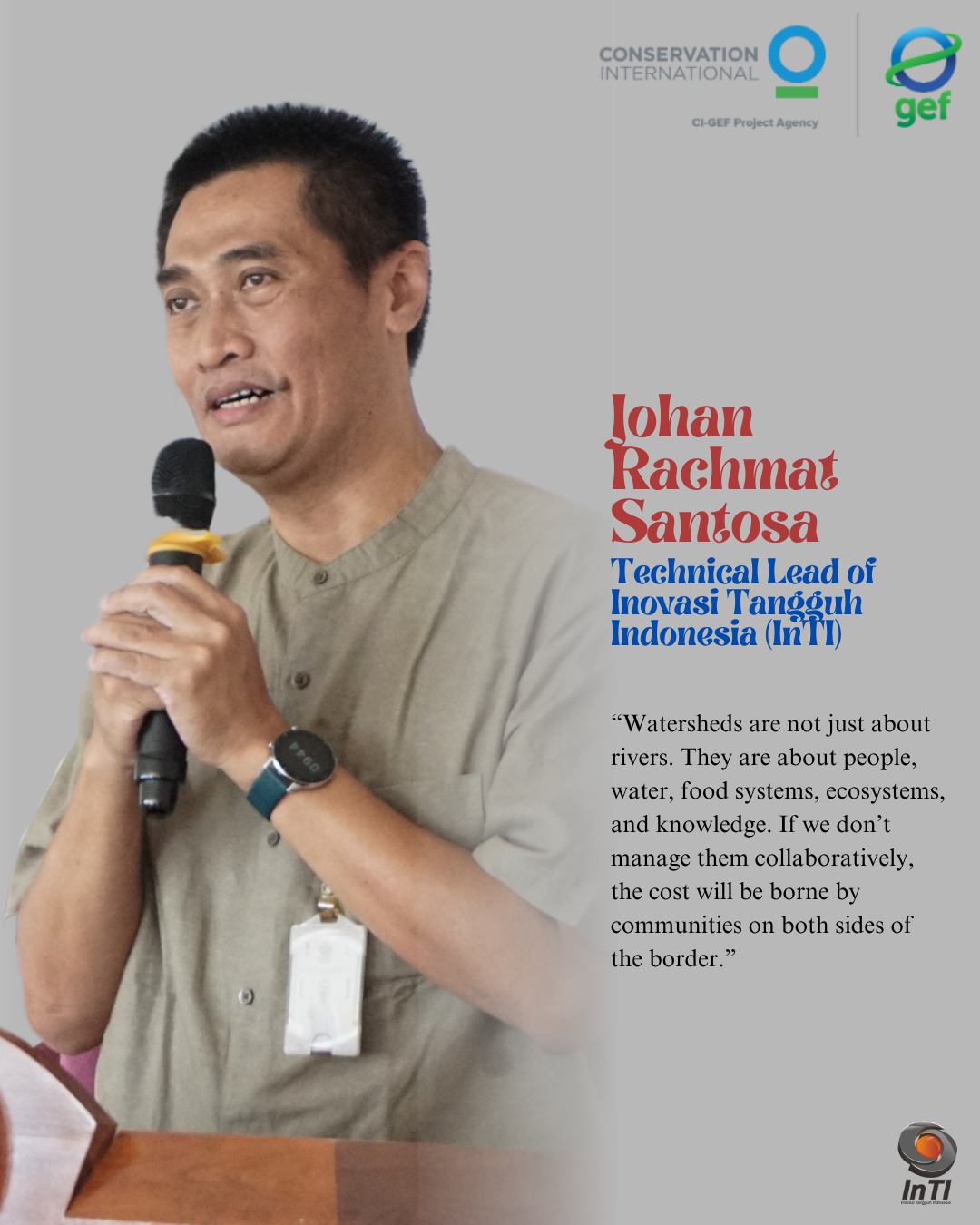
Johan Rachmat Santosa, Technical Lead from the project team of InTI, underscored the heart of TIWA’s strategy:
“Watersheds are not just about rivers. They are about people, water, food systems, ecosystems, and knowledge. If we don’t manage them collaboratively, the cost will be borne by communities on both sides of the border.”
Global Relevance, Local Ownership
The TIWA Project is a model aligned with SDG 6.5.2 on transboundary water cooperation. With global interest from various actors like UN Organizations, INGOs and CSOs, it is already seen as a case study in nature-based diplomacy and solutions which may contribute to other global agreements such as Paris Agreement on Climate Change, Sendai Framework for Disaster Risk Reduction, New Urban Agenda on Sustainable Cities and many more.
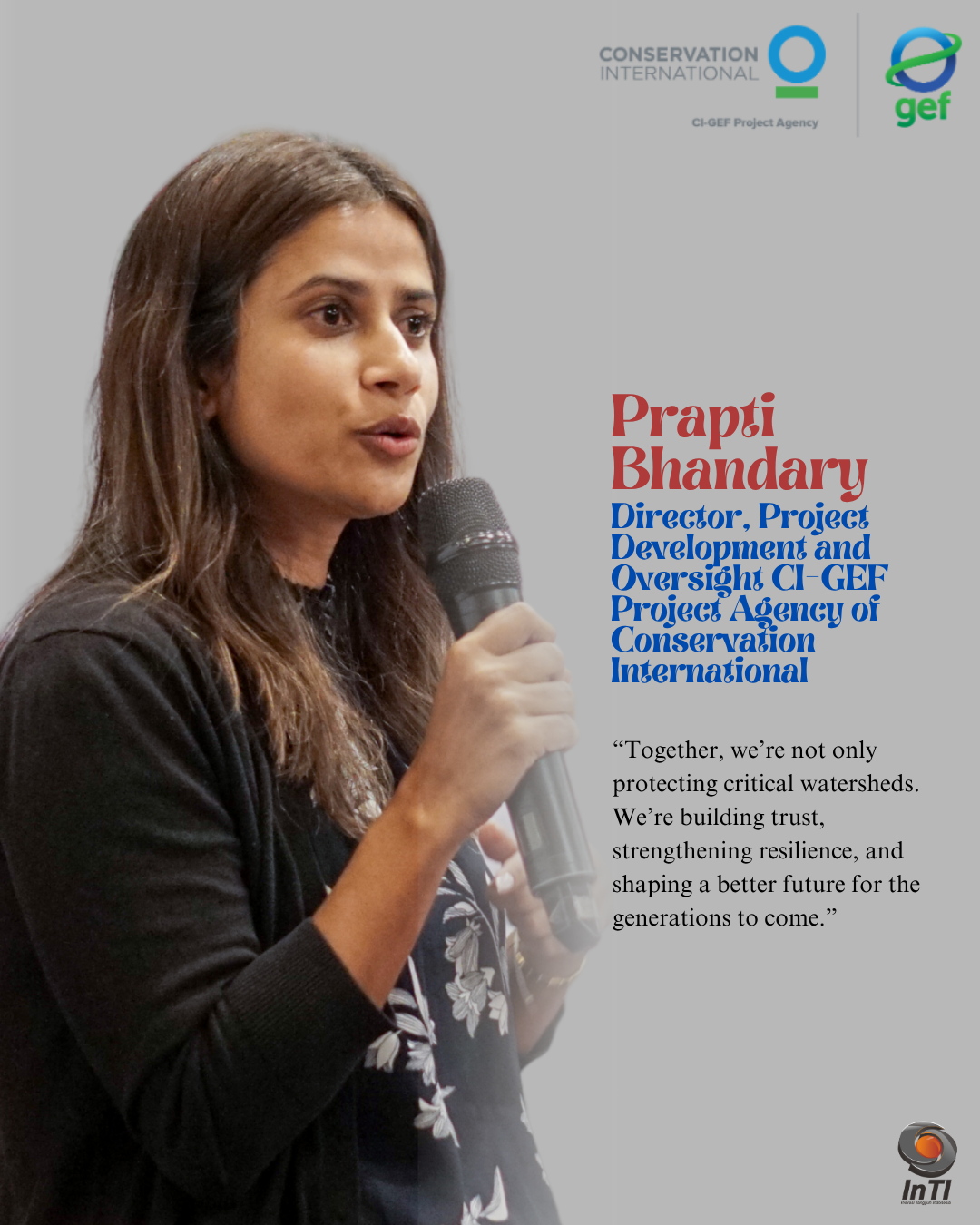
In her remarks, Prapti Bhandary, Director, Project Development and Oversight CI-GEF Project Agency of Conservation International, remarked:
“Together, we’re not only protecting critical watersheds. We’re building trust, strengthening resilience, and shaping a better future for the generations to come.”
Collaboration, Legacy for the Future
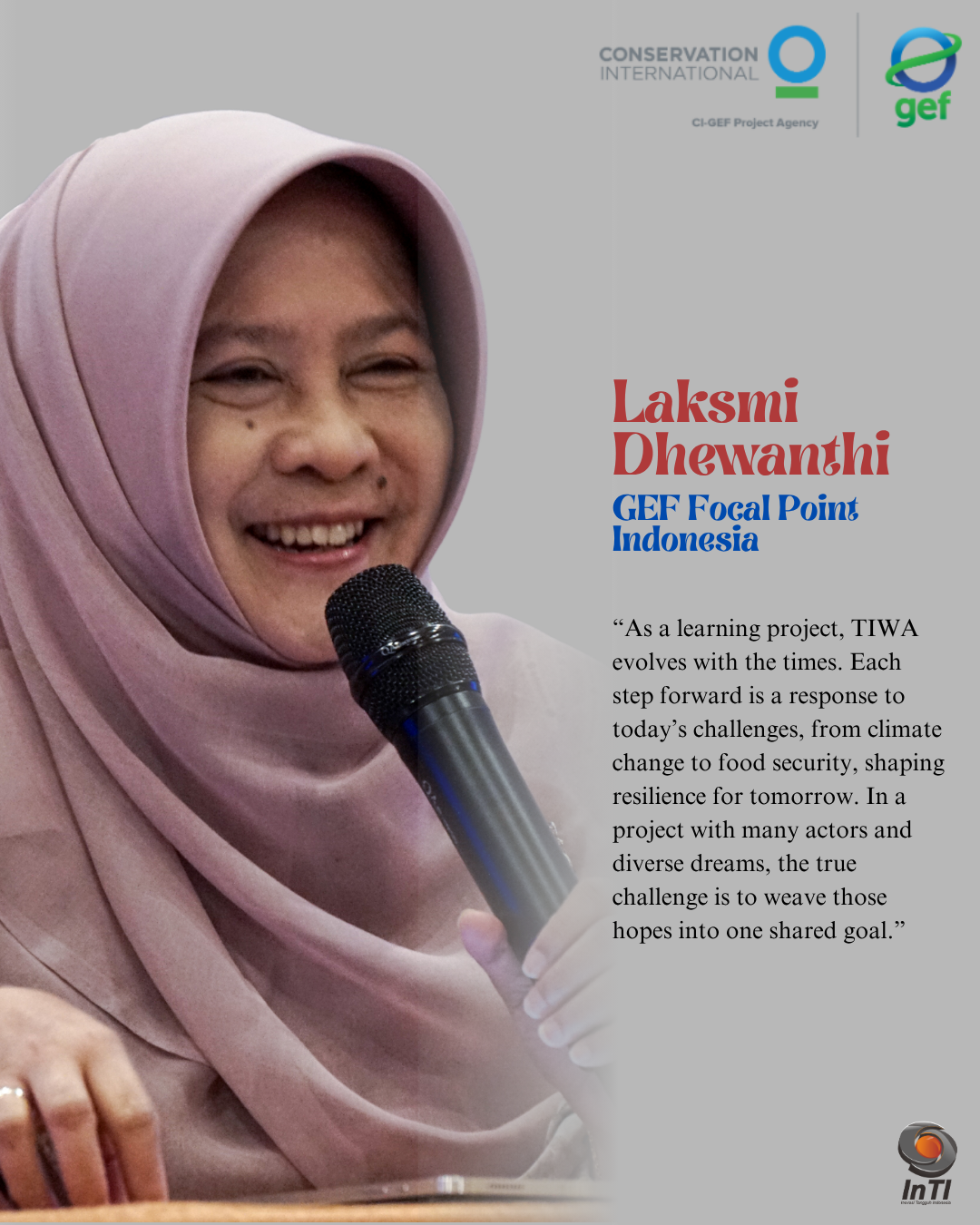
“TIWA is more than just a project, it’s a legacy in the making, a shared commitment to build a sustainable future across borders,” Ir. Laksmi Dhewanthi, M.A., the GEF Focal Point as well as the Principal Inspector of the Ministry of Environment (KLH)/Environmental Management Agency (BPLH) stated. While donor funds provide the icing, the real cake must come from us, true impact happens when collaboration drives the process.
Furthermore, she emphasized that this is not just talk. TIWA is real action, bringing inclusive and adaptive watershed management to life.
As a learning project, TIWA evolves with the times. Each step forward is a response to today’s challenges, from climate change to food security, shaping resilience for tomorrow. In a project with many actors and diverse dreams, the true challenge is to weave those hopes into one shared goal. And that is exactly what TIWA sets out to do, to turn collaboration into transformation, and transformation into lasting impact.
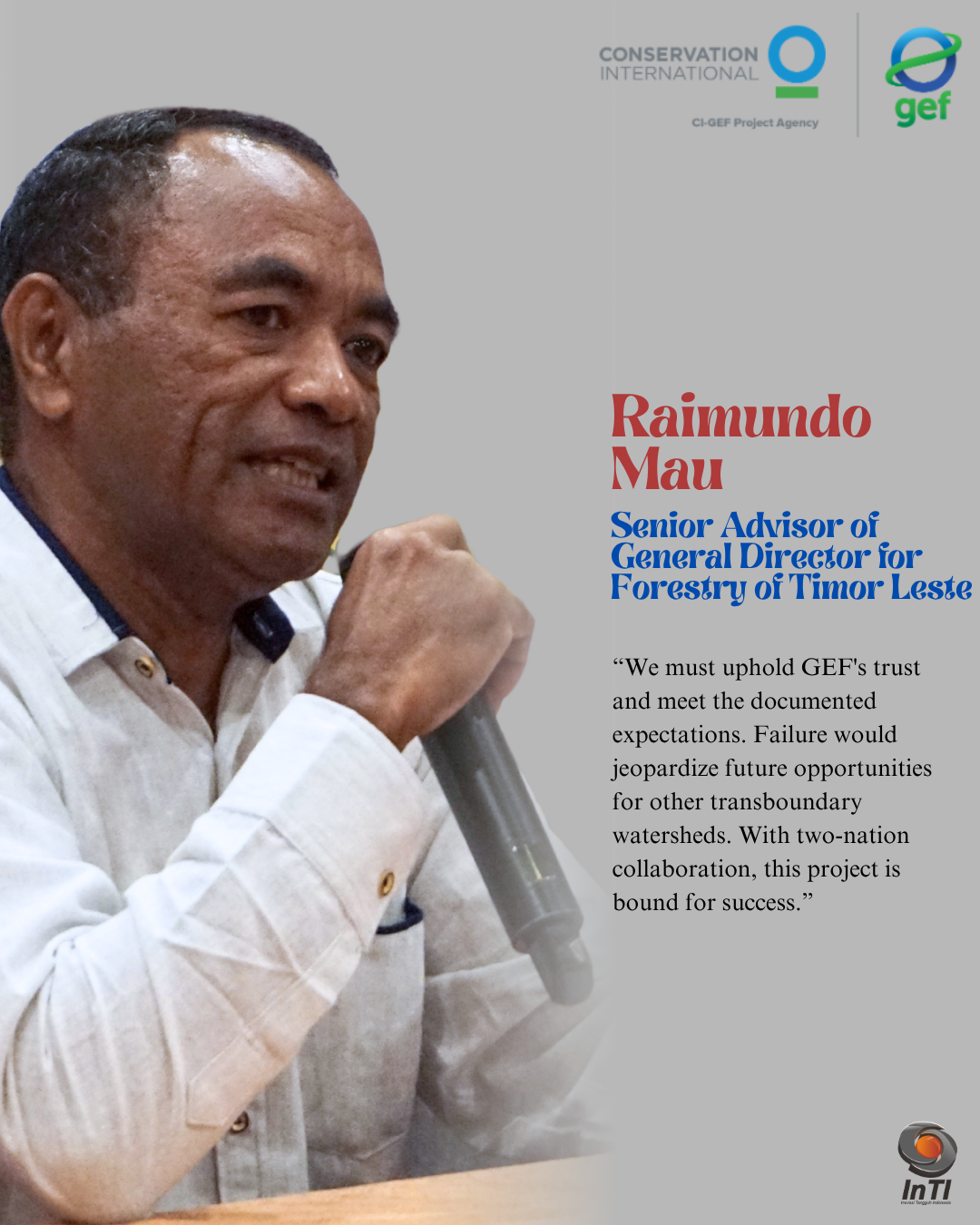
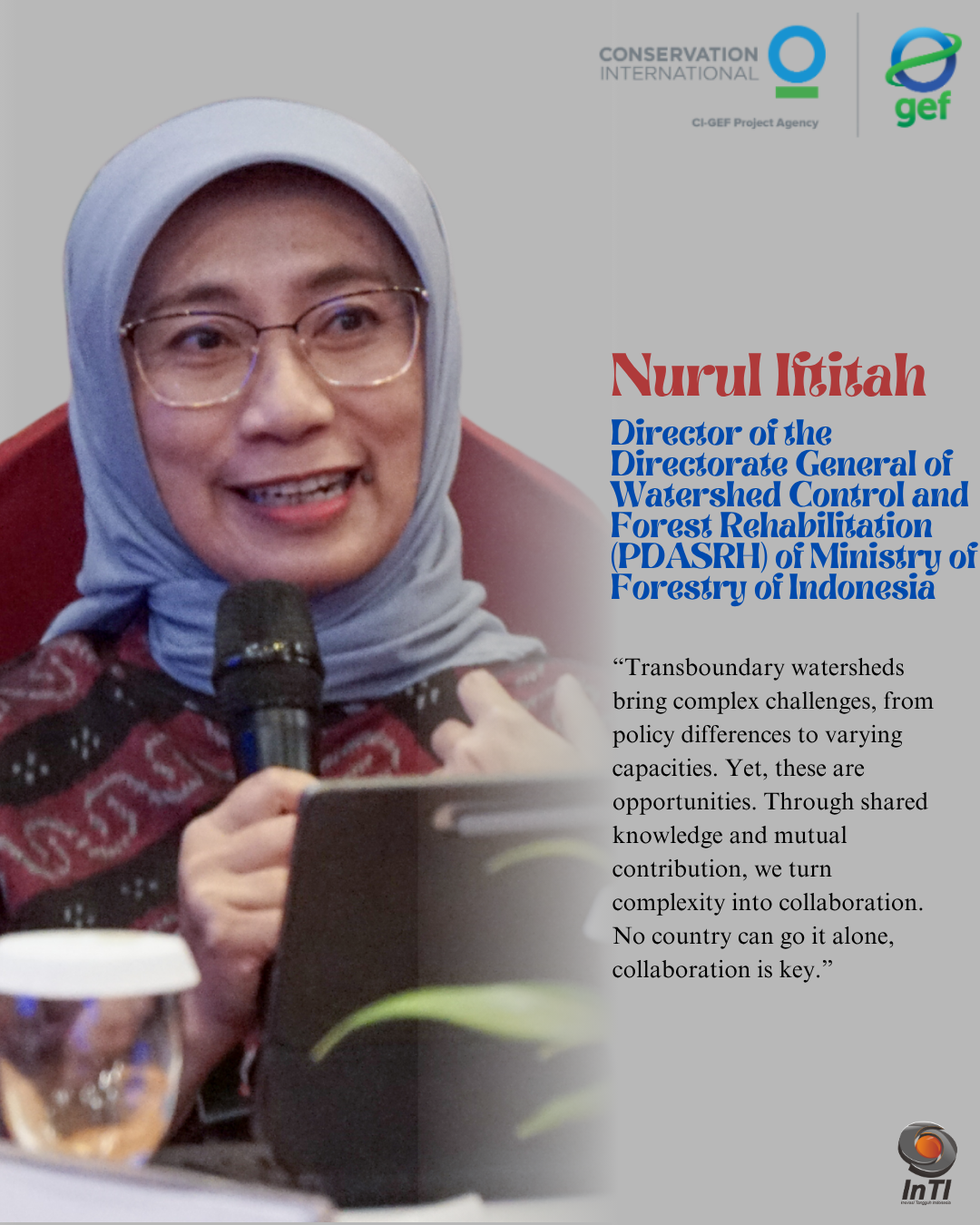
Nurul Iftitah, S.Hut., M.Si., Director of the Directorate General of Watershed Control and Forest Rehabilitation (PDASRH) of Ministry of Forestry of Indonesia together with Raimundo Mau, Senior Advisor of General Director for Forestry of Timor Leste representing the executing agencies of TIWA, at the end of this collaborative workshop gave closing remarks:
"The TIWA Inception Workshop ignited deep commitment. Transboundary watersheds bring complex challenges—from policy differences to varying capacities. Yet, these are opportunities. Through shared knowledge and mutual contribution, we turn complexity into collaboration. No country can go it alone—collaboration is key. My hope is the TIWA Project sets a new standard for success, delivering lasting impact far beyond its five-year span. Healthy watersheds, prosperous communities—that's our shared vision,” remarked Nurul.
While, Raimundo stated that, “"These two days have united us in a shared 5-year mission. Upon returning from this workshop, each party must communicate this project down to the village level. Challenges exist, but two days of brainstorming have yielded diverse solutions. Thank you for the sharing and learning. We are optimistic about achieving our desired goals. After three years of convincing GEF since 2020, this project is now underway. We must uphold GEF's trust and meet the documented expectations. Failure would jeopardize future opportunities for other transboundary watersheds. With two-nation collaboration, this project is bound for success.
#TIWAProject #TimorIsland #WatershedCooperation #IndonesiaTimorLeste #SDG652 #NatureKnowsNoBorders #SustainableWaters #EnvironmentalDiplomacy #GEF #CI #INTI #InovasiTangguhIndonesia #TransboundaryWatersheds #ClimateResilience